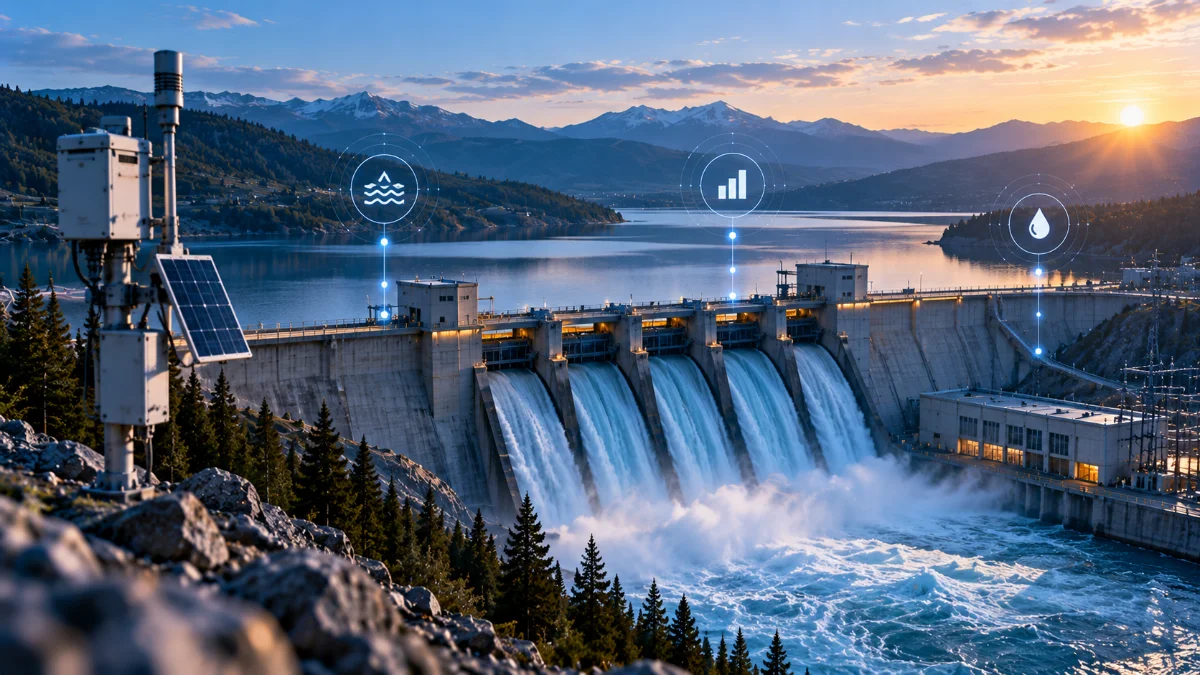
Monitoring movement, seepage and structural response
Strain, displacement, pore-water pressure and seepage data from the dam body, foundation and spillways, giving engineers additional visibility into how the structure behaves.
What TestoGauge can monitor
Dam behaviour is shaped by water load, temperature and the response of the foundation. Instrumentation provides data on changes in these conditions so they can be reviewed against design expectations.
- Dam body: strain, displacement, tilt, temperature and cracking in concrete and surrounding materials.
- Foundation and abutments: pore-water pressure, earth and water pressure, and subsurface movement.
- Seepage and flow: seepage in and around the structure, and flow through spillways and water control systems.
- Dynamic response: vibration from water movement, seismic activity and heavy equipment.
- Geometry: geospatial position and 3D scans that record changes in the dam’s shape over time.
Combining these measurements in one record helps engineers review how the dam and its foundation respond to changing conditions.
Relevant instrumentation
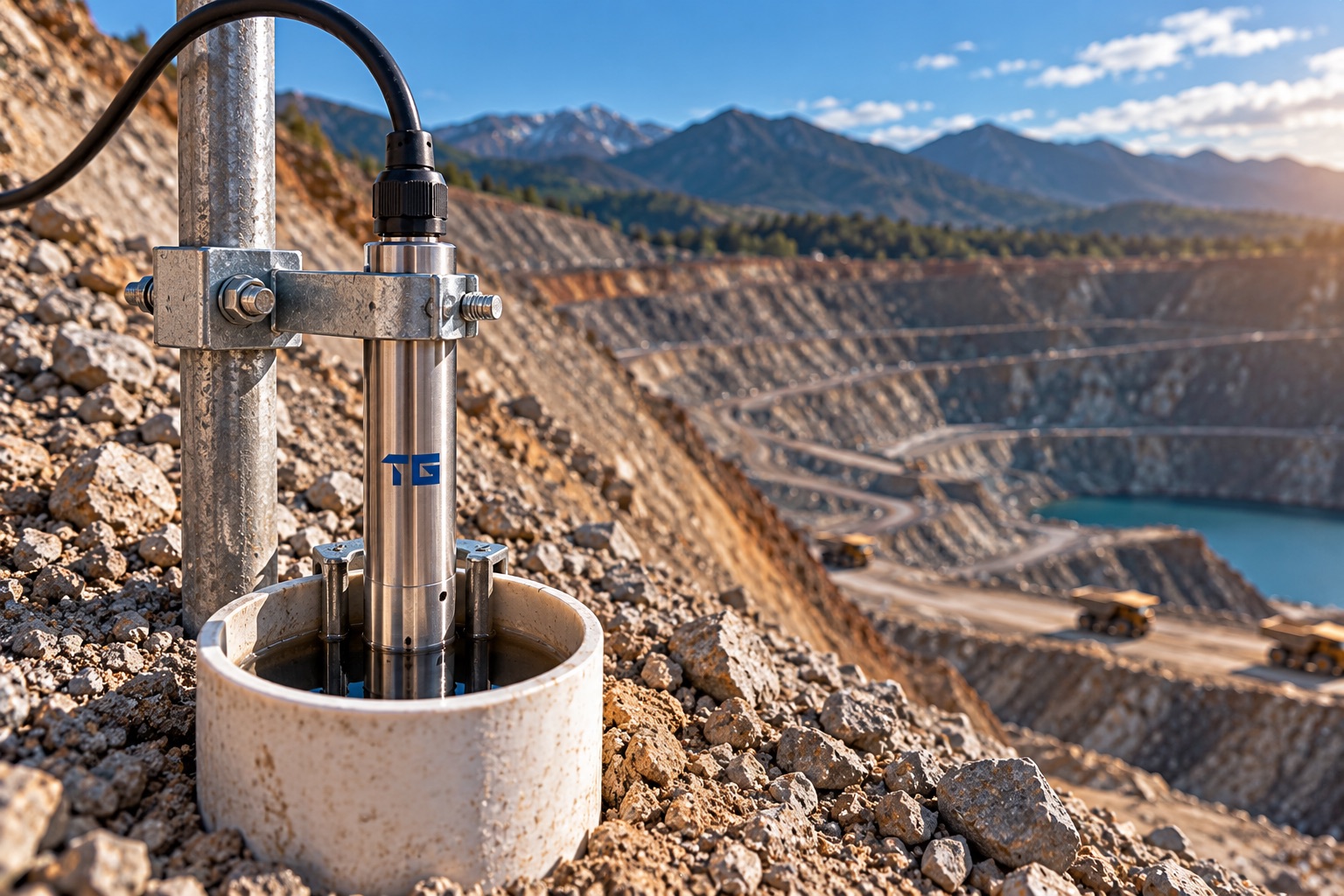
- Piezometers: pore-water pressure within the dam and foundation.
- Seepage monitoring sensors: seepage in and around the structure.
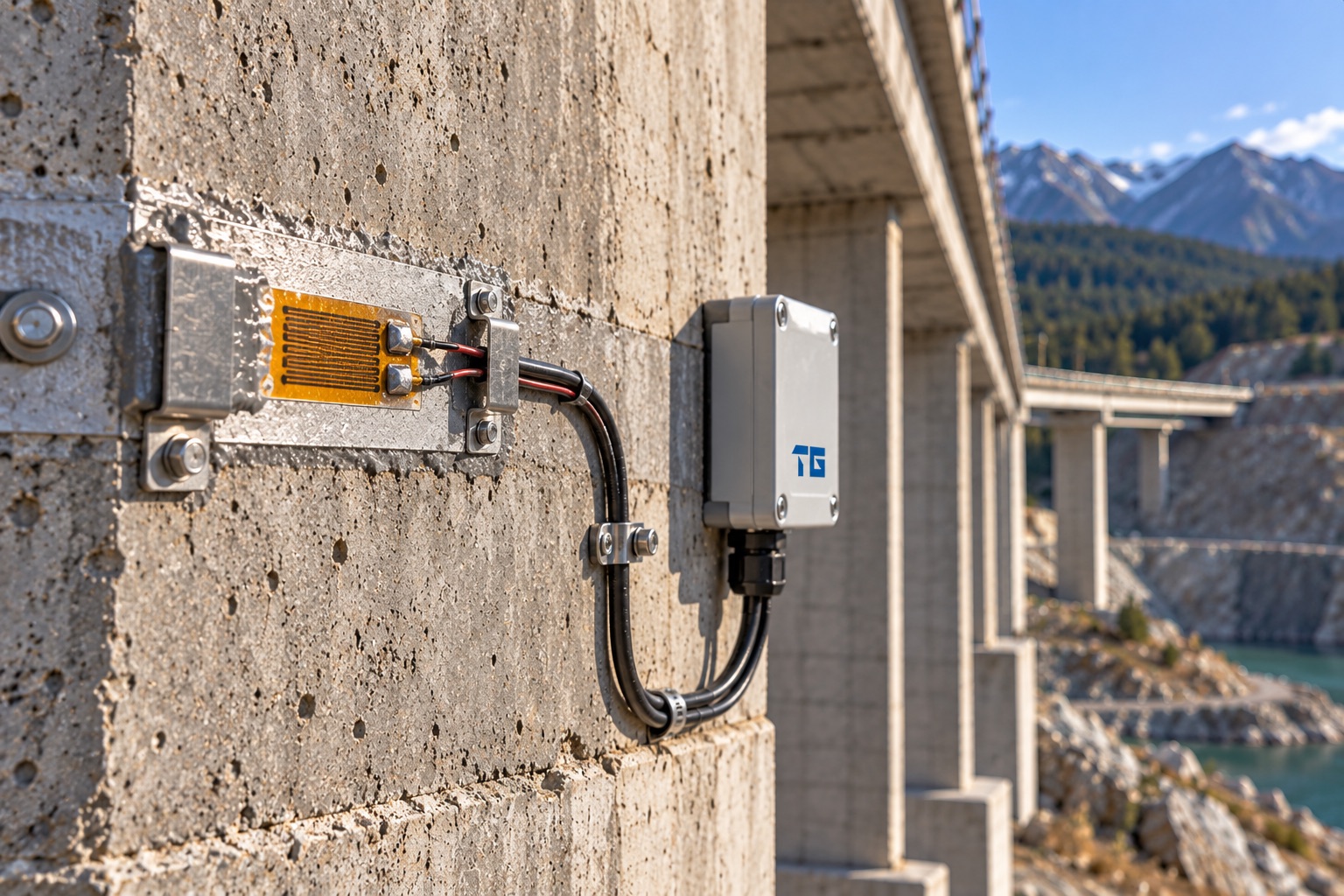
- Strain gauges: strain in the dam body and foundation.
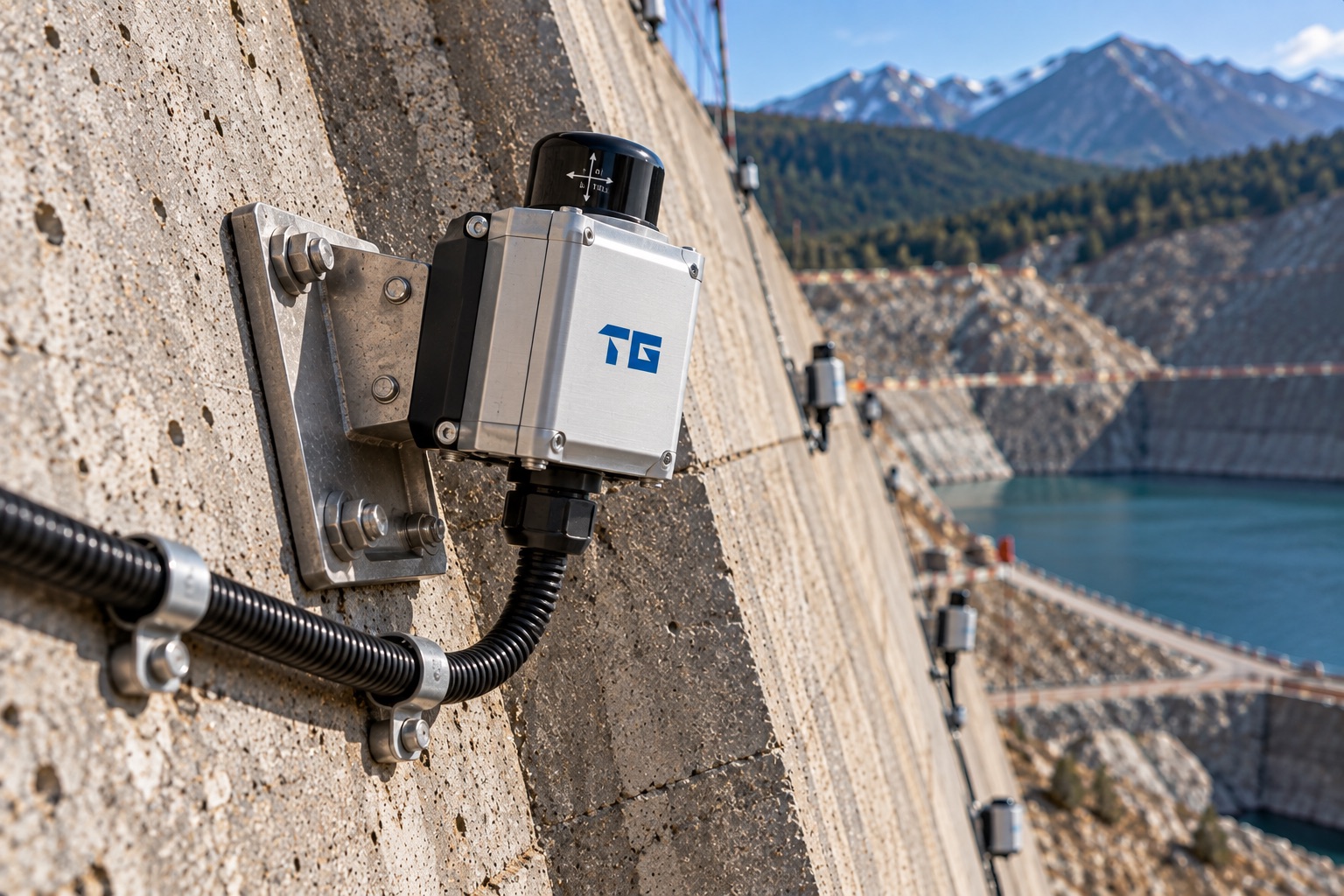
- Displacement sensors and tiltmeters: movement and tilting of the dam body, foundation and spillways.
- Crack and acoustic emission sensors: crack formation and growth, and high-frequency signals associated with cracking.
- Pressure cells: soil and water pressure at the foundation, spillways and abutments.
- Accelerometers and vibration sensors: dynamic loads from water movement, seismic activity and equipment.
- Temperature and humidity sensors: thermal and moisture conditions in concrete and surrounding materials.
- Flow meters: flow through spillways, turbines and water control systems.
- GNSS sensors and laser scanning: position and 3D geometry of the dam.
From the sensor to engineering review
-
01
Instrument
Sensors placed across the dam body, foundation, spillways and abutments according to the monitoring plan.
-
02
Connect
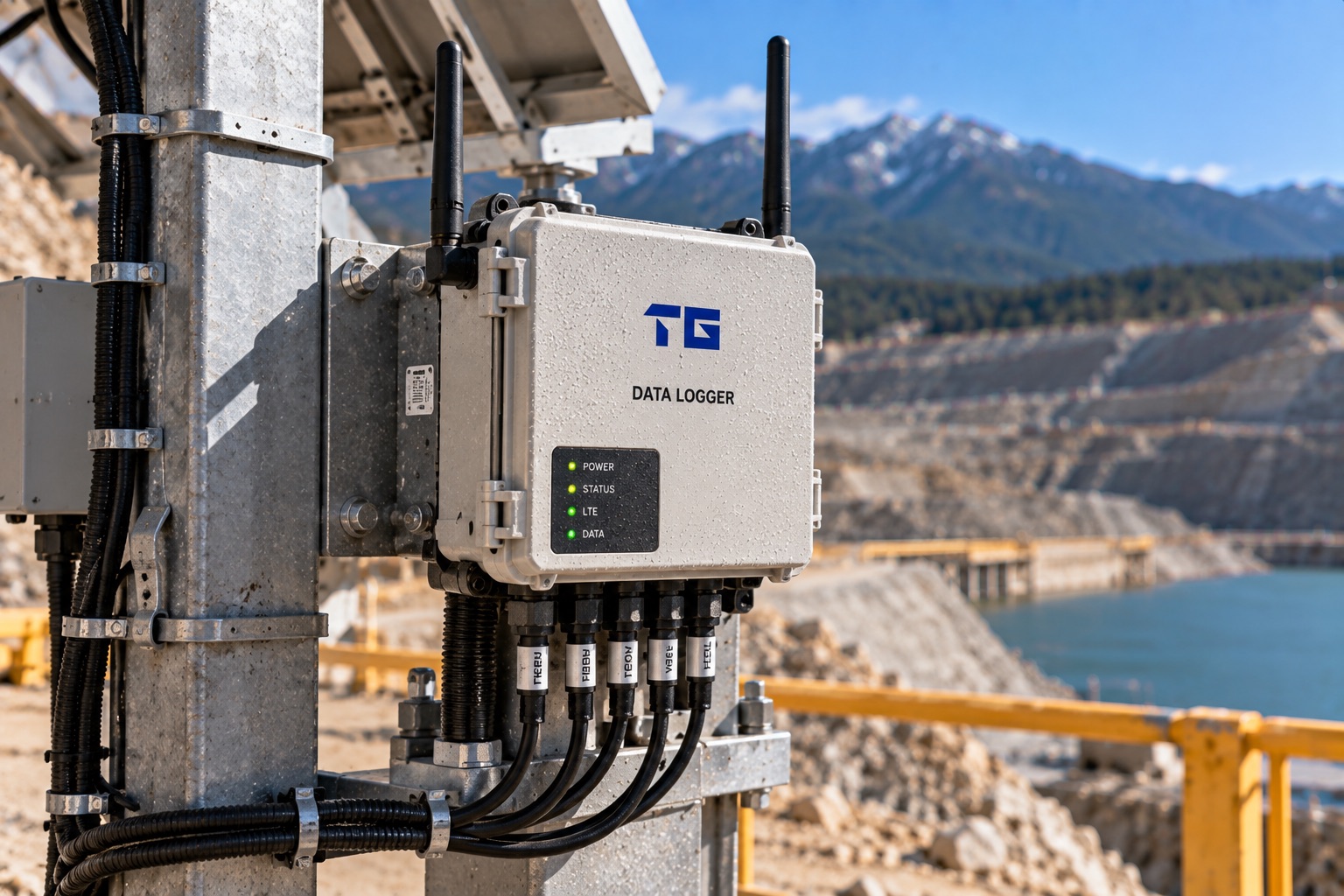
Supported instruments can use wired, wireless or fiber-optic configurations, depending on the instrument, monitoring requirements and site conditions.
-
03
Review & alert
Readings are trended, checked for gaps and anomalies, and compared against configurable thresholds.
-
04
Digital twin
Sensor data can be incorporated into digital-twin views to help teams review asset conditions and changes over time.
Related services
Related products
Projects in this sector
Tell us about your asset and the monitoring objectives, and we can discuss relevant experience during scoping.