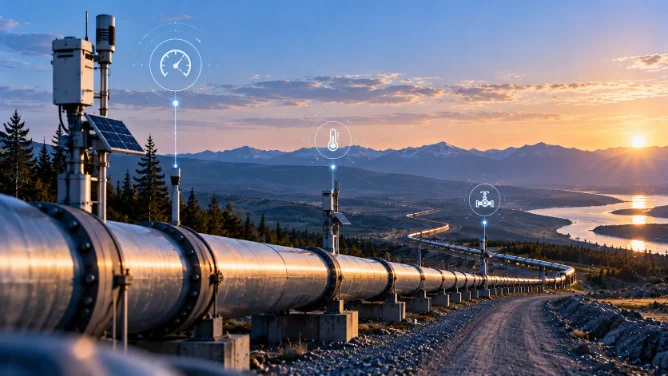
Pressure, movement and condition data across the pipeline
Strain, pressure, flow, temperature and ground movement data along the route, with distributed fiber-optic sensing for long sections.
What TestoGauge can monitor
Pipelines run for long distances through changing ground and conditions. Monitoring combines measurements on the pipe itself with measurements of the surrounding soil, helping teams see where conditions are changing.
- Pipe structure: strain, displacement, cracking and vibration.
- Operating conditions: pressure, temperature and flow, including irregularities such as reduced flow.
- Condition: corrosion, and moisture that can accelerate it.
- Leak-related monitoring: changes in pressure, flow or acoustic signals that may indicate a leak.
- Surrounding ground: soil movement, geospatial position and seismic activity.
- Testing: pressure monitoring during hydrostatic integrity testing.
Distributed fiber-optic sensing can provide strain data over long pipeline sections, alongside point sensors at selected locations.
Relevant instrumentation
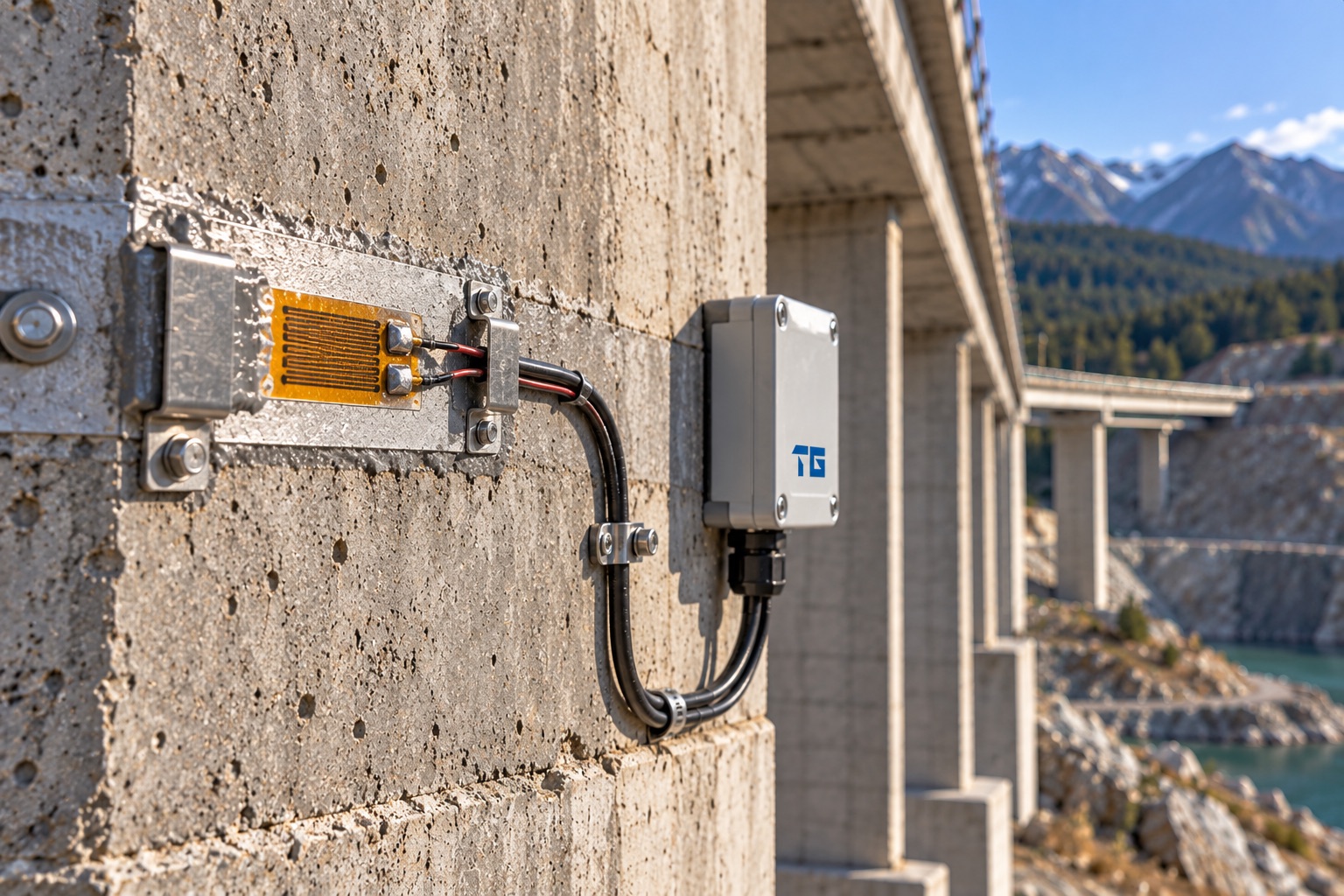
- Strain gauges and distributed fiber-optic sensors: strain at points and along long sections.
- Displacement sensors: movement, expansion and misalignment of pipeline components.
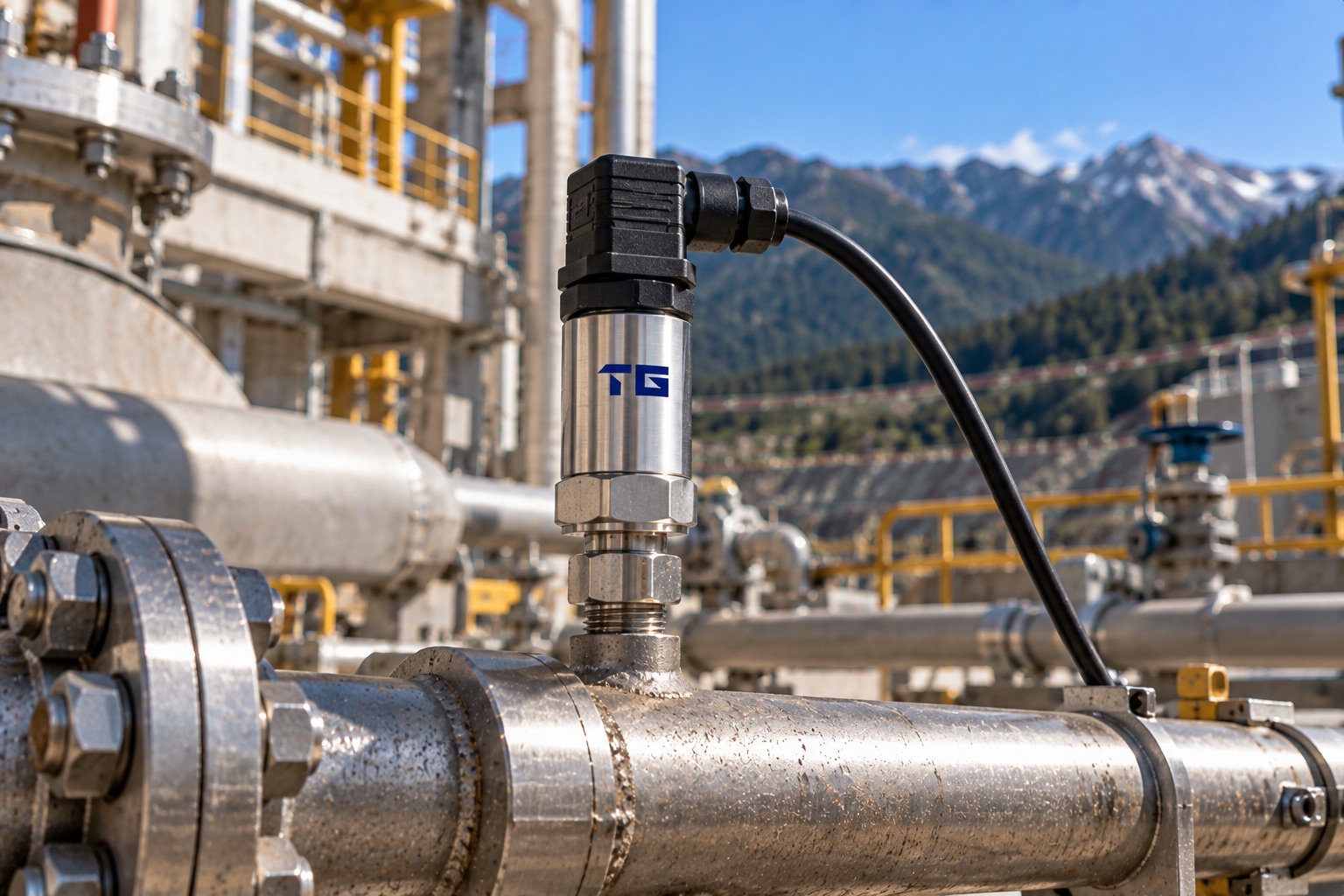
- Pressure transducers: pressure changes within the pipeline.
- Flow meters: flow of fluids or gases and irregularities in flow rate.
- Temperature sensors: temperature changes that affect material behaviour.
- Corrosion sensors: onset and progression of corrosion.
- Leak detection sensors: pressure, flow or acoustic changes that may indicate a leak.
- Acoustic emission sensors: high-frequency signals associated with structural changes such as cracks or leaks.
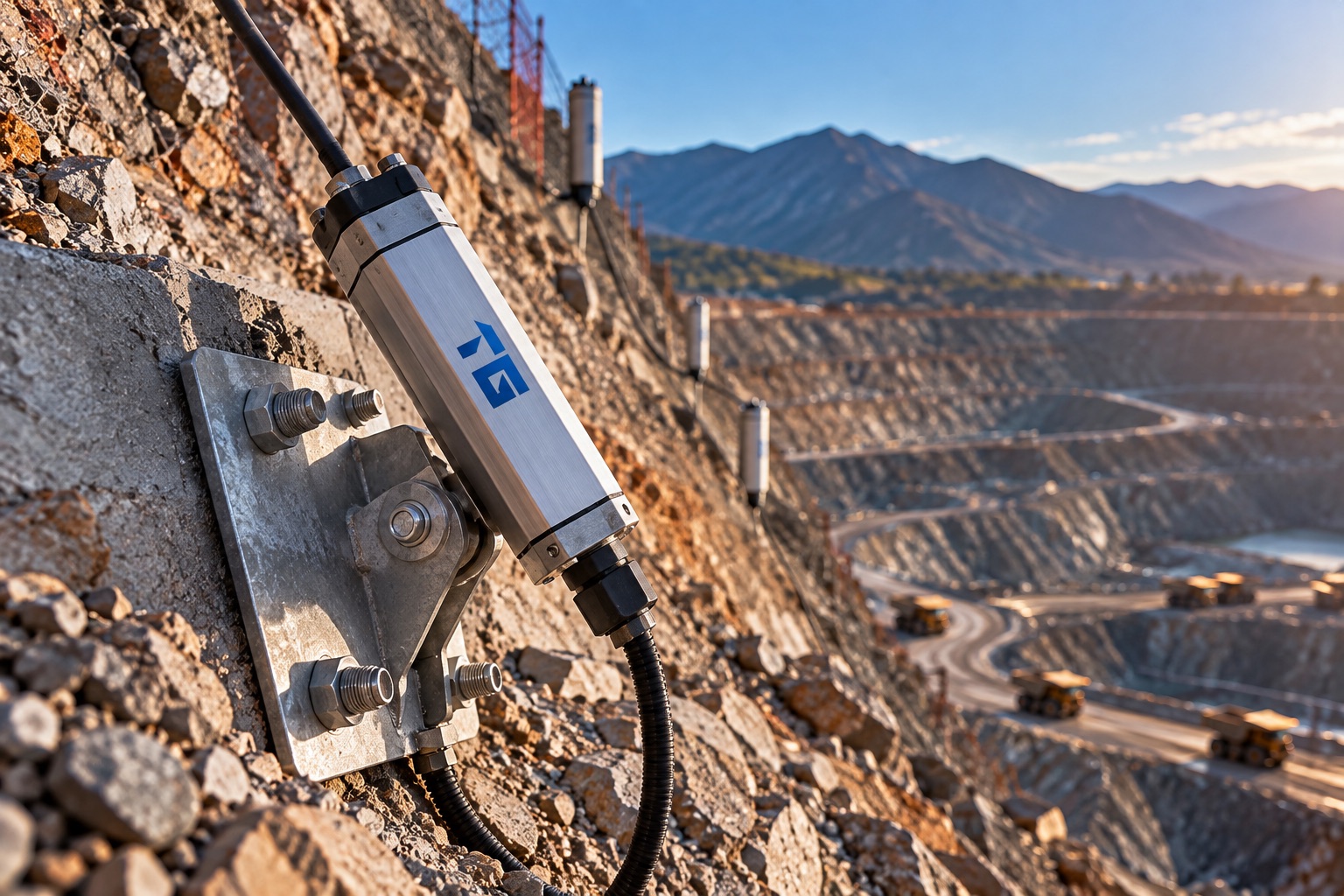
- Inclinometers, extensometers and GNSS: movement of surrounding soil and the pipeline’s position.
- Hydrostatic testing sensors: pressure during integrity testing.
From the sensor to engineering review
-
01
Instrument
Point sensors at selected locations, with distributed fiber where long sections need coverage.
-
02
Connect
Supported instruments can use wired, wireless or fiber-optic configurations, depending on the instrument, monitoring requirements and site conditions.
-
03
Review & alert
Readings are viewed by location along the route and compared against configurable thresholds.
-
04
Digital twin
Sensor data can be incorporated into digital-twin views to help teams review pipeline conditions and changes over time.
Related services
Related products
Projects in this sector
Tell us about your asset and the monitoring objectives, and we can discuss relevant experience during scoping.