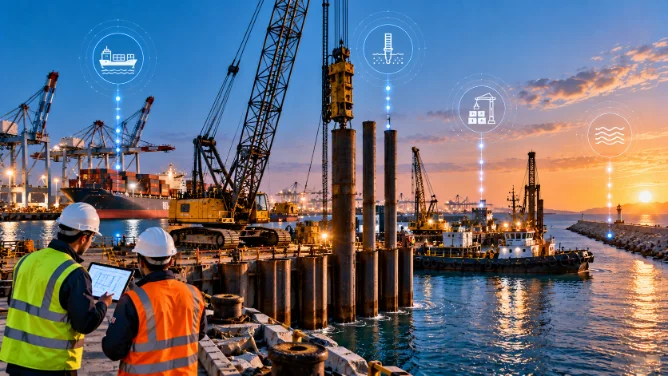
Pier health monitoring under waves, vessels and weather
Vibration, tilt, strain, pore-water pressure and crack movement data from piers and waterfront structures, with weather data for context.
What TestoGauge can monitor
Piers and waterfront structures carry loads from waves, vessel traffic, vehicles and weather. Monitoring records how the structure and its foundation respond to these loads over time.
- Dynamic response: vibration and dynamic forces from waves, ship traffic and seismic events.
- Tilt and settling: inclination of the pier caused by soil movement or water erosion.
- Structural strain: deformation in beams, columns and supporting walls.
- Foundation conditions: pore-water pressure behind pier walls and in surrounding soil.
- Cracks: crack size and movement over time.
- Weather: wind speed, temperature, humidity and barometric pressure.
Weather data recorded alongside structural readings helps engineers review how environmental conditions relate to structural response.
Relevant instrumentation
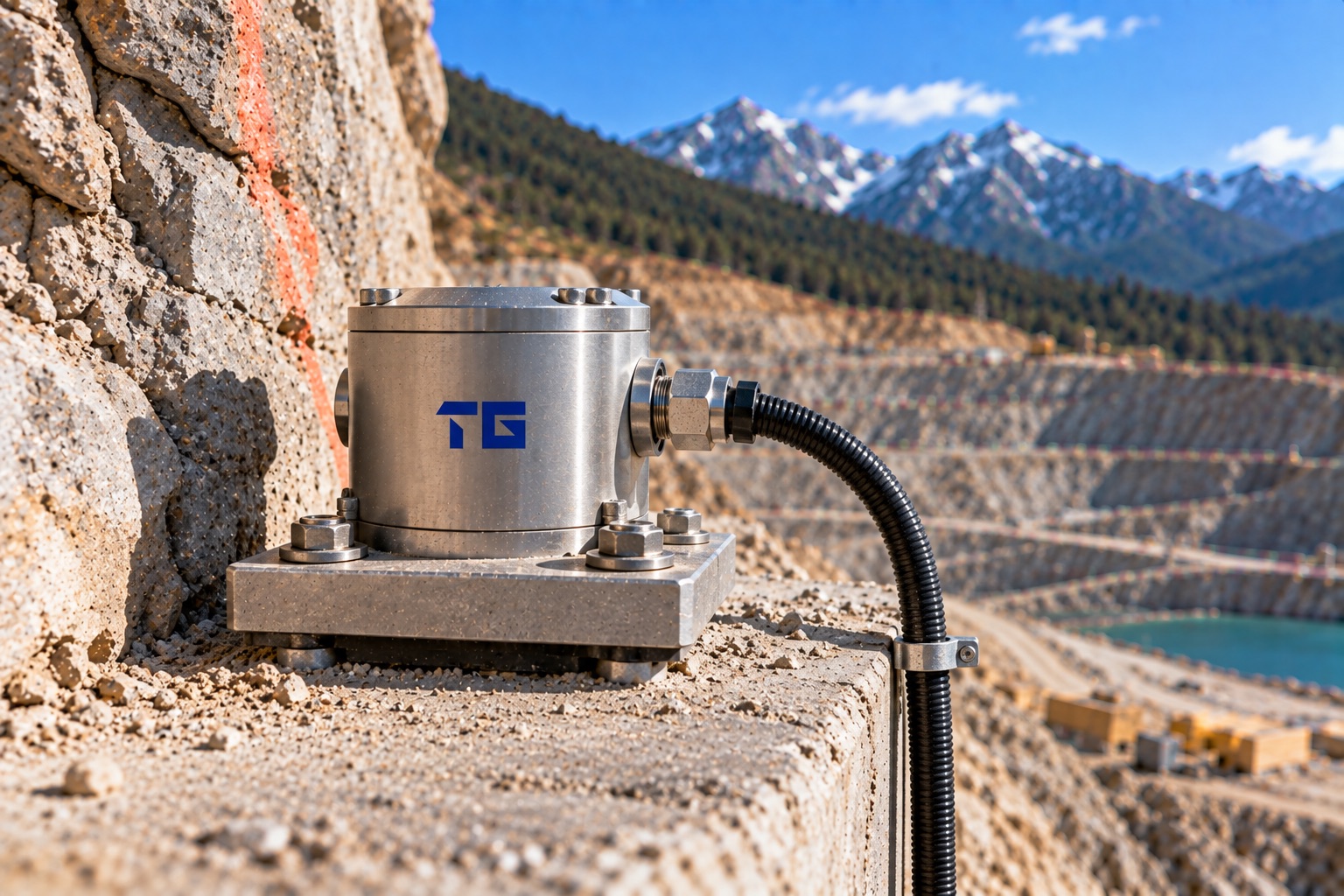
- Accelerometers: vibration and dynamic forces from waves, vessels and seismic events.
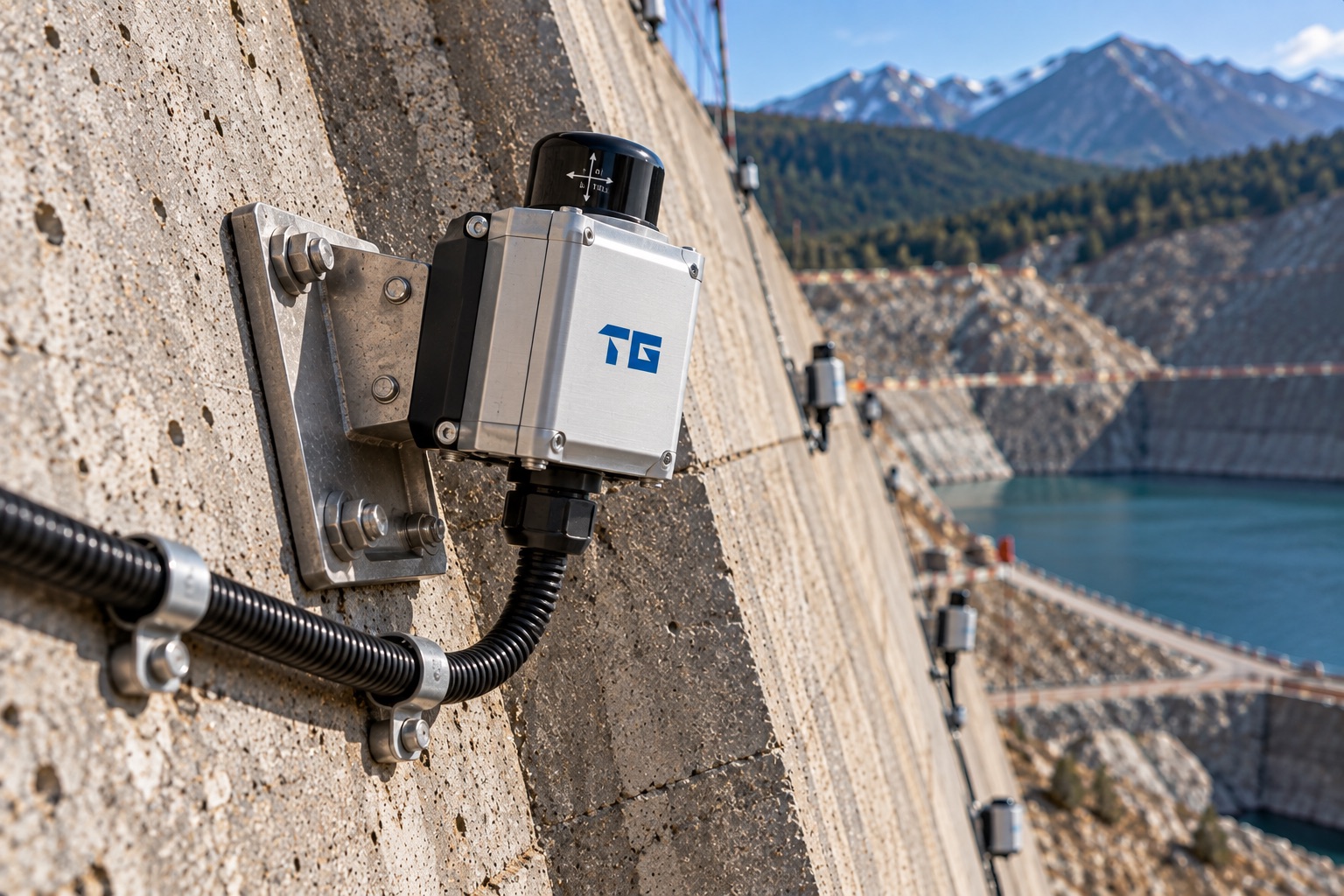
- Tiltmeters: tilting or settling of the pier structure.
- Strain gauges: strain in beams, columns and supporting walls.
- Piezometers: pore-water pressure behind pier walls and in surrounding soil.
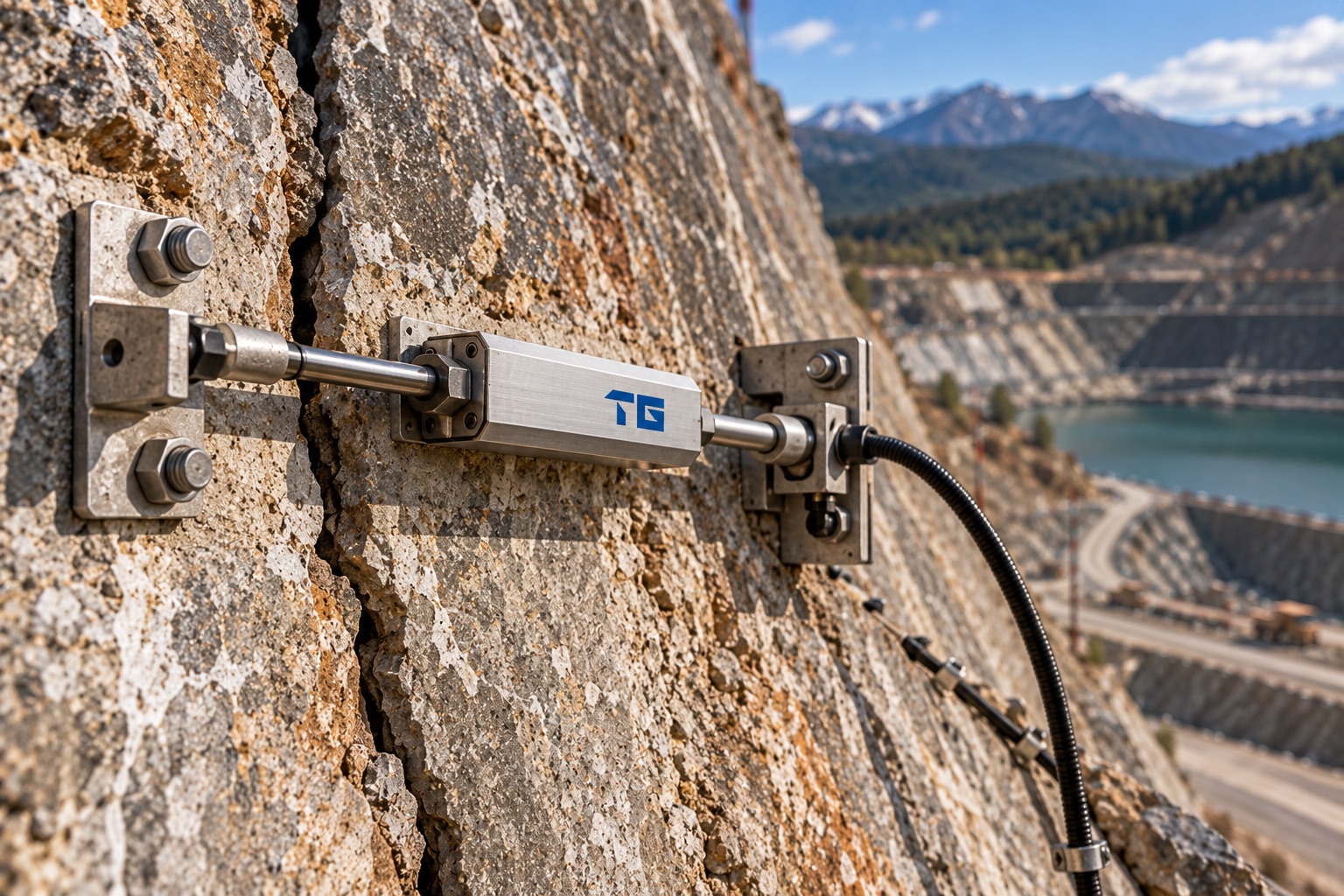
- Crack meters: crack size and movement over time.
- Weather station: wind, temperature, humidity and barometric pressure.
From the sensor to engineering review
-
01
Instrument
Sensors on pier beams, columns and walls, with piezometers in the surrounding soil.
-
02
Connect
Supported instruments can use wired, wireless or fiber-optic configurations, depending on the instrument, monitoring requirements and site conditions.
-
03
Review & alert
Readings and weather data are trended together, with reporting and configurable thresholds.
-
04
Digital twin
Sensor data can be incorporated into digital-twin views to help teams review pier conditions and changes over time.
Related services
Related products
Projects in this sector
Tell us about your asset and the monitoring objectives, and we can discuss relevant experience during scoping.