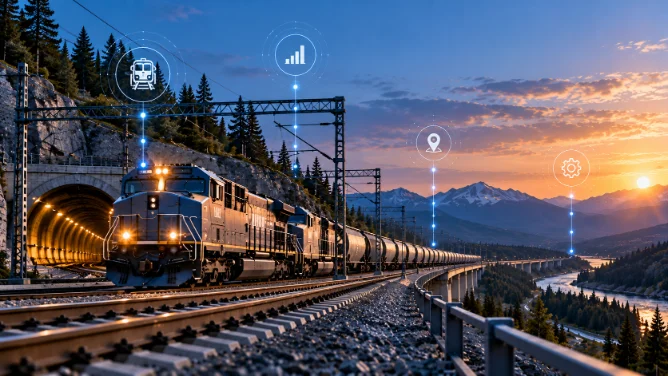
Track, embankment and foundation monitoring in one system
Strain, vibration and temperature data from concrete track, with settlement and inclination monitoring for the embankments and foundations beneath it.
What TestoGauge can monitor
Rail infrastructure carries repeated dynamic loads from passing trains, and its performance depends on the ground beneath the track. Monitoring focuses on two areas: the concrete track itself, and the embankments and foundations that support it.
- Concrete track: strain under train loads, vibration from train movement, and track temperature.
- Embankments and foundations: vertical settlement beneath the track.
- Track supports: tilt and movement of embankments and supports.
Track and ground readings can be reviewed together, so a change in one can be considered alongside the other.
Relevant instrumentation
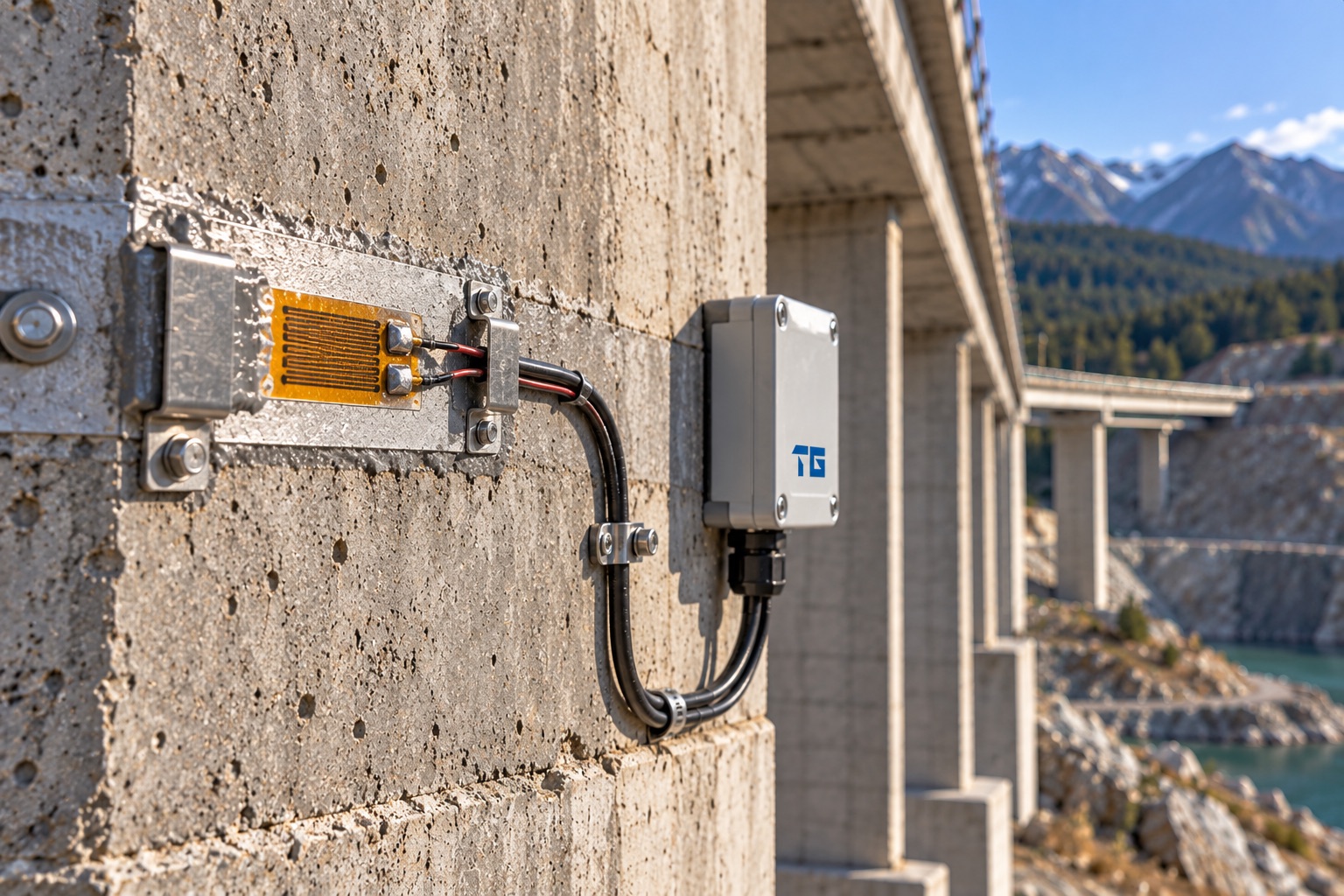
- Strain gauges: deformation of concrete track under train loads.
- Vibration sensors: vibration from train movement, providing data for review of dynamic track response and potential changes in behaviour.
- Temperature sensors: temperature of track and concrete components.
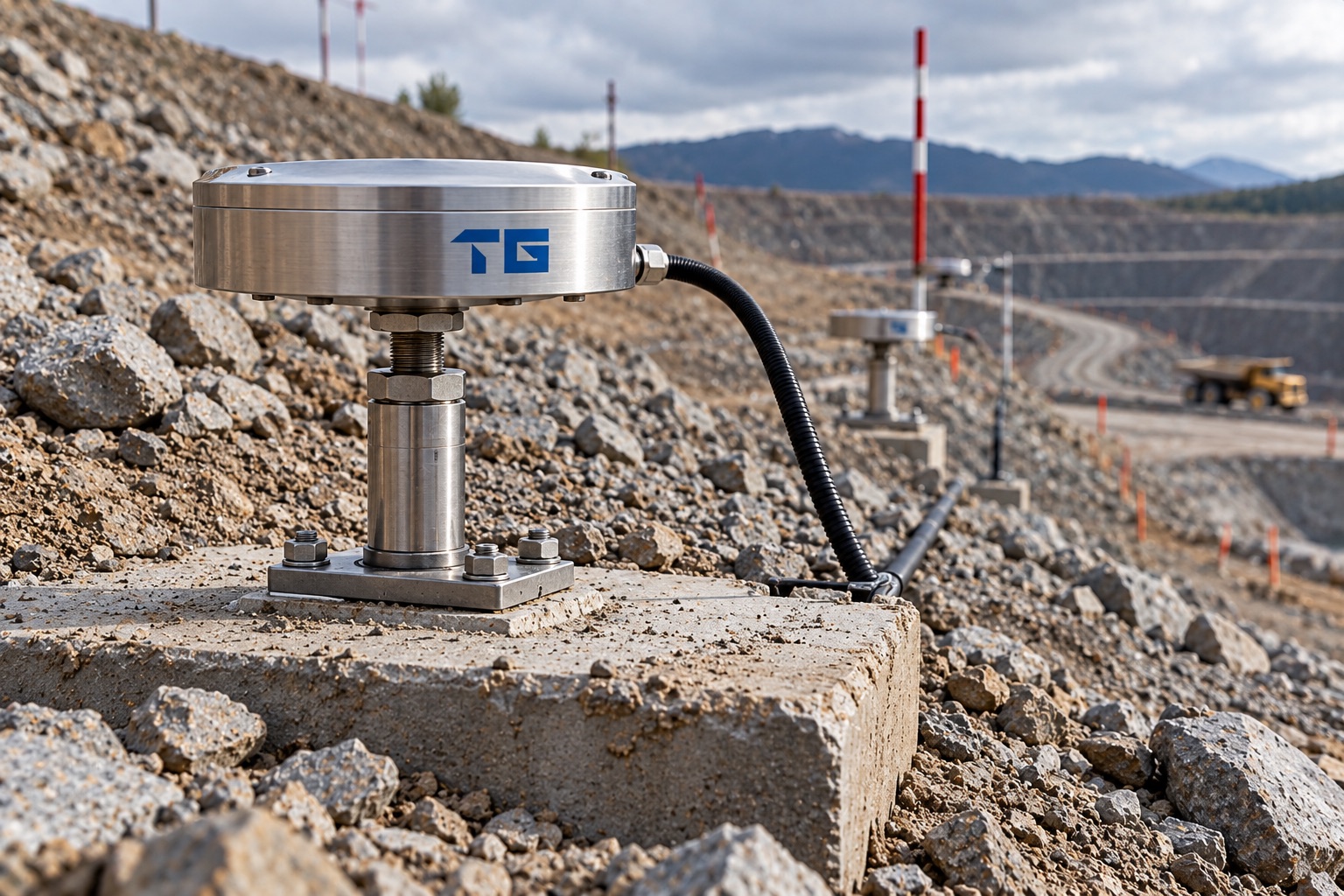
- Settlement sensors: vertical movement in embankments and foundations.
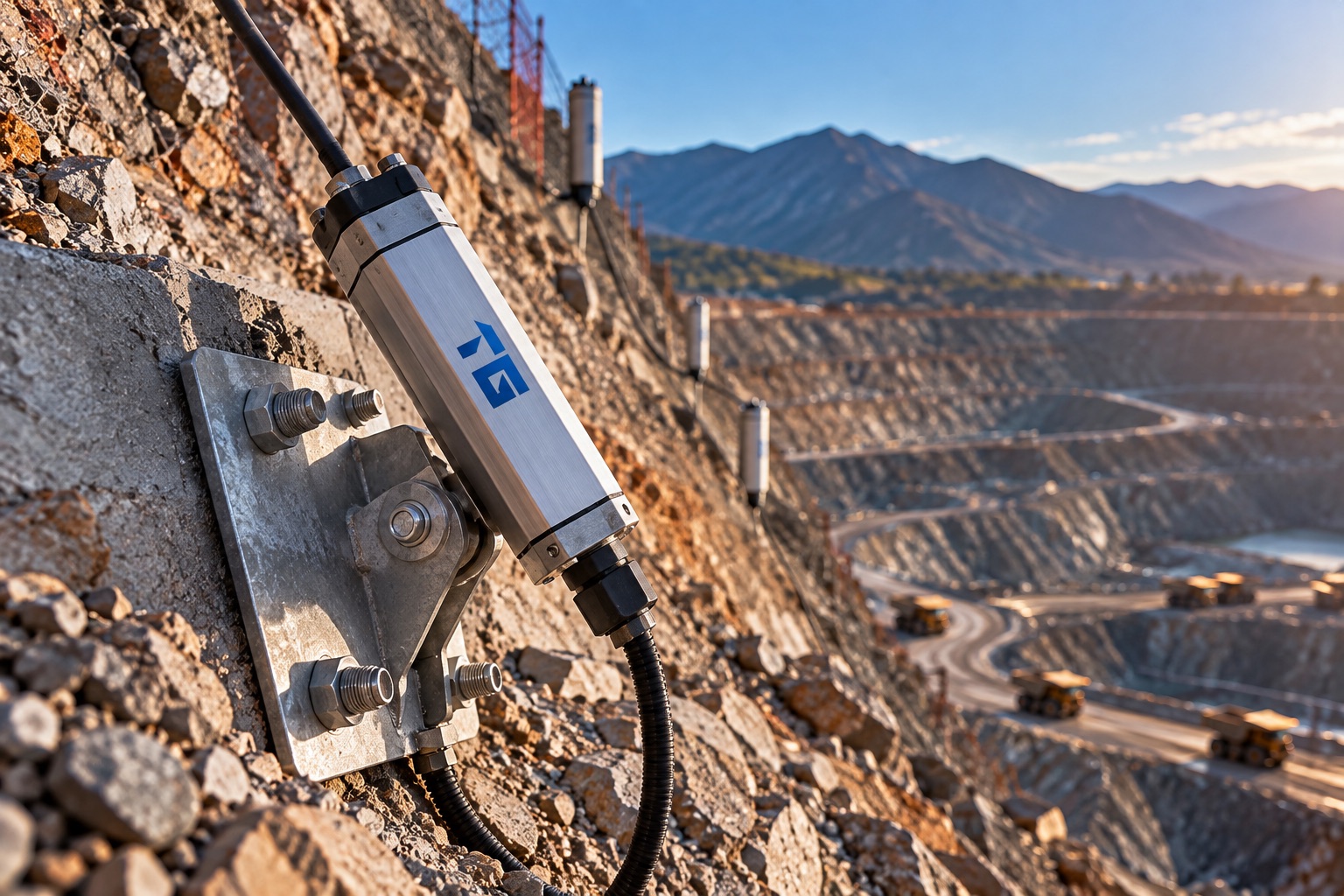
- Inclinometers: tilt and movement of embankments and track supports.
From the sensor to engineering review
-
01
Instrument
Sensors on concrete track sections, embankments and foundations, matched to the section being monitored.
-
02
Connect
Supported instruments can use wired, wireless or fiber-optic configurations, depending on the instrument, monitoring requirements and site conditions.
-
03
Review & alert
Track and ground readings are trended and compared against configurable thresholds.
-
04
Digital twin
Monitoring data can be incorporated into digital-twin views to help teams review rail infrastructure conditions and changes over time.
Related services
Related products
Projects in this sector
Tell us about your asset and the monitoring objectives, and we can discuss relevant experience during scoping.